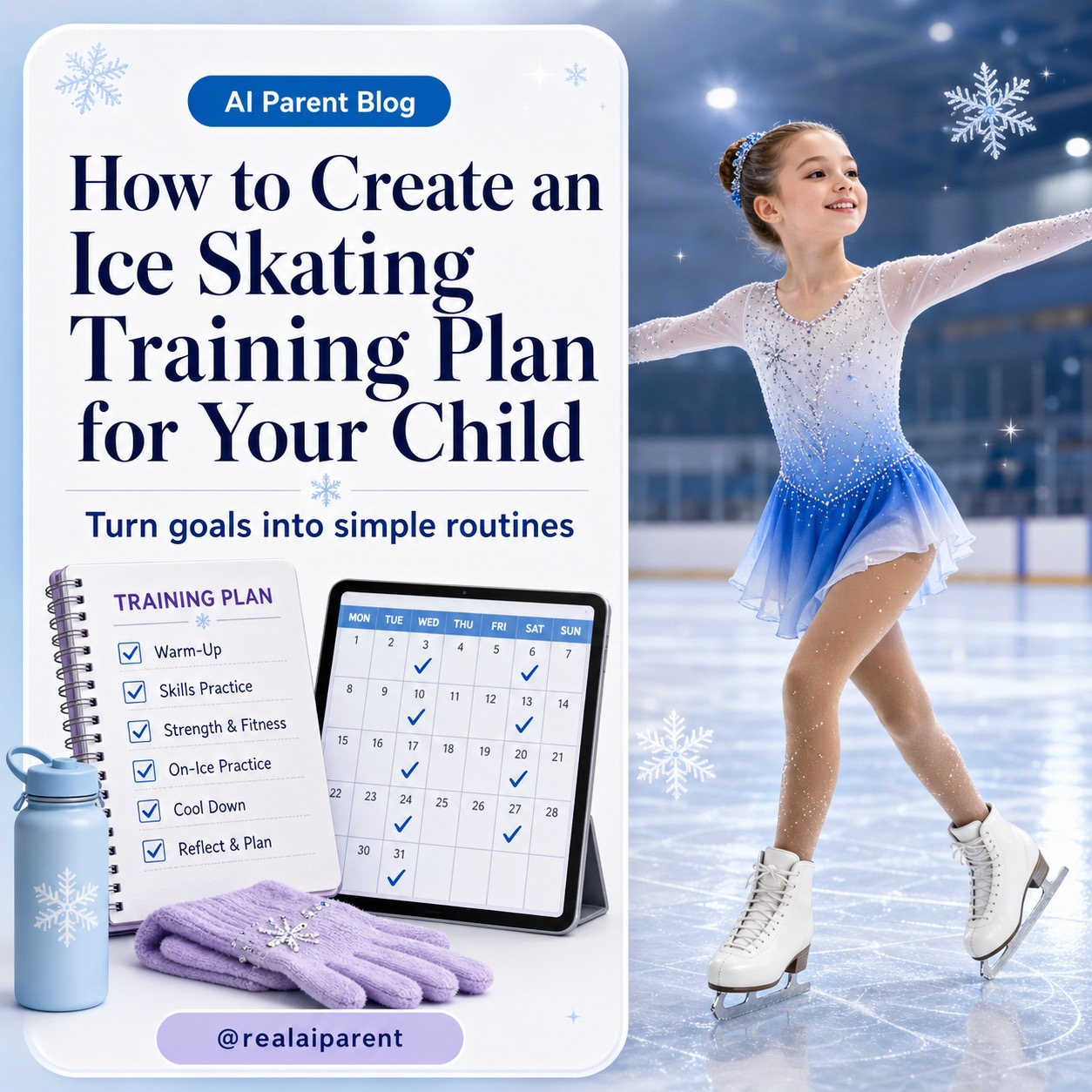
How to Create an Ice Skating Training Plan for Your Child
April 26, 2026 • 6 min read
Ice skating can help kids build balance, confidence, coordination, focus, and discipline. A simple plan can help families turn the goal of “getting better at skating” into steady, healthy progress over time.
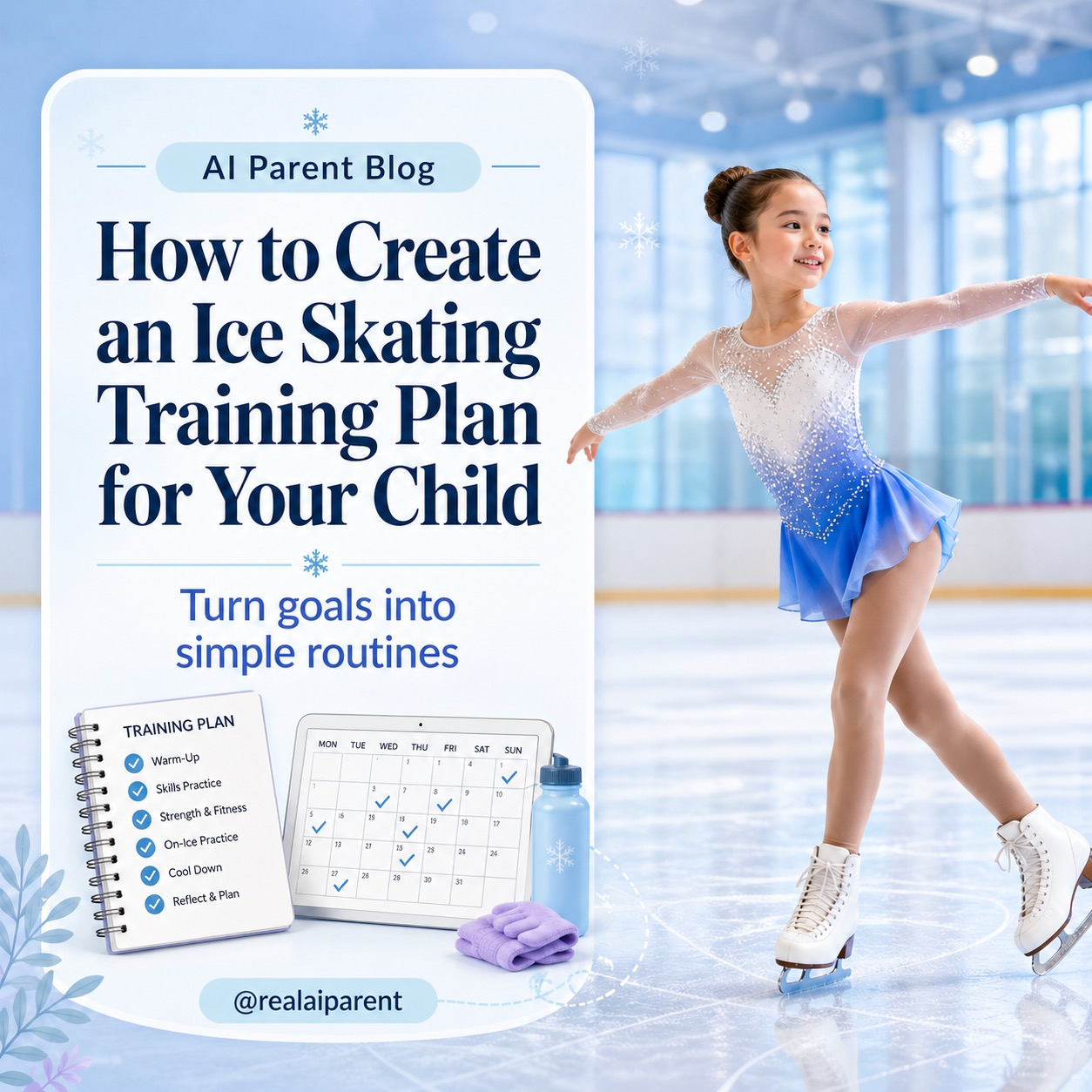
Why ice skating is a great sport for kids
Ice skating is more than learning how to move across the ice. It can help children practice balance, body control, rhythm, confidence, and focus. For many kids, skating also teaches patience because progress often comes one small skill at a time.
A child might start by learning how to stand, glide, stop, and turn. Over time, those basic skills can grow into stronger edges, better posture, smoother transitions, and more confidence on the ice.
That is why a plan matters. Instead of only thinking, “My child should practice more,” parents can help turn skating into a realistic weekly routine.
Start with a healthy goal
Some children dream about becoming competitive skaters. Others simply want to feel more confident during lessons, enjoy a winter sport, or have a fun activity that helps them stay active. Both goals are valuable.
The best starting point is not pressure. It is clarity. Ask what your child wants to improve first. Maybe the goal is learning to stop safely, practicing balance, improving turns, building strength, or becoming more comfortable during lessons.
Practice skating skills twice a week.
Build better balance and confidence on the ice.
Stretch after each skating session.
Prepare for the next skating lesson with a simple routine.
Why a plan matters for skating progress
A child does not usually become a stronger skater from one big practice session. Improvement tends to come from consistent, age-appropriate practice over time. A simple plan helps families organize practice days, rest days, warm-ups, stretching, and encouragement.
Families are busy. School, homework, meals, activities, and weekends can make it hard to stay consistent. A plan gives the family a shared structure so skating practice does not depend only on memory or last-minute motivation.
A plan can also help parents keep the tone encouraging. The goal is progress, not pressure. Kids are more likely to keep going when practice feels clear, supportive, and manageable.
Example ice skating training plan for kids
Here is a simple weekly ice skating plan a parent could create in AI Parent. This can be adjusted based on the child’s age, skating level, lesson schedule, and energy level.
Warm-up: Do 5–10 minutes of light movement before skating.
Skills practice: Practice basic skating skills 2–3 times per week.
Balance work: Do simple off-ice balance exercises at home.
Stretching: Stretch gently after practice.
Reflection: Review one skating goal with a parent after practice.
Rest: Include recovery time so the child does not feel overloaded.
Keep the plan age-appropriate
A young beginner does not need an intense training schedule. A beginner may need short, positive practice sessions focused on comfort, safety, and basic movement. An older or more experienced skater may be ready for more structured practice, conditioning, and goal review.
Parents should also pay attention to signs of fatigue or frustration. If skating starts to feel stressful every week, the plan may need to become lighter, simpler, or more flexible.
Use AI Parent to create the skating plan
AI Parent can help families turn an ice skating goal into a clear Sports Plan or Custom Plan. Parents can create tasks, choose a schedule, and help the child follow the routine over time.
For example, a parent might create a plan called “Ice Skating Practice Plan” and add recurring tasks for warm-up, skating practice, stretching, balance exercises, and weekly reflection.
Practice basic skating skills
Do 10 minutes of balance exercises
Stretch after skating
Pack skates, gloves, water bottle, and warm clothes
Review one thing that improved this week
Make the plan encouraging, not overwhelming
It is natural for parents to want their child to succeed. But with youth sports, the healthiest path is usually one that supports steady growth, enjoyment, rest, and confidence.
Instead of asking, “How do I make my child a star athlete?” a better question is, “How do I support my child’s skating goals with a simple, healthy training plan?”
That shift matters. It keeps the focus on the child’s development, not just performance. The plan should help the child feel supported, not pressured.
Helpful reminders for parents
Before building a skating routine, consider your child’s schedule, sleep, schoolwork, mood, and interest level. A plan should fit real family life. It should also leave room for fun.
If your child takes lessons, the skating coach’s guidance should lead the technical side of training. AI Parent can help with the family routine around practice, preparation, consistency, and follow-through.
Helpful sources
Learn to Skate USA describes skating instruction as a progressive curriculum that helps skaters build skills and confidence over time. The CDC recommends that children and adolescents get regular physical activity, including muscle- and bone-strengthening activities during the week. The American Academy of Pediatrics has also warned families to be thoughtful about intensive training and early sports specialization, especially when pressure, burnout, or overuse may become concerns.
Read more from U.S. Figure Skating / Learn to Skate USA, CDC Physical Activity Guidelines, and American Academy of Pediatrics guidance on sports specialization.
Final thoughts
Great skaters are not built in one day. They grow through small, consistent steps. A good plan helps families make those steps clearer, healthier, and easier to follow.
With AI Parent, parents can turn an ice skating goal into a simple routine that supports practice, confidence, and steady progress.