Create an Anti-Bullying Plan for Your Child or Teen
August 21, 2026 • 5 min read
Build a consistent family routine to check whether a child or teen is being bullied, recognize warning signs, prevent escalation, and provide emotional support.
Children and teens do not always say when they are being bullied. They may feel embarrassed, fear the situation will get worse, or not know how to explain it. A consistent check-in can make it easier to speak up.
AI Parent can turn conversations, prevention steps, and emotional-support activities into scheduled tasks. It does not diagnose or automatically detect bullying—the parent or caregiver provides the listening, judgment, and support.
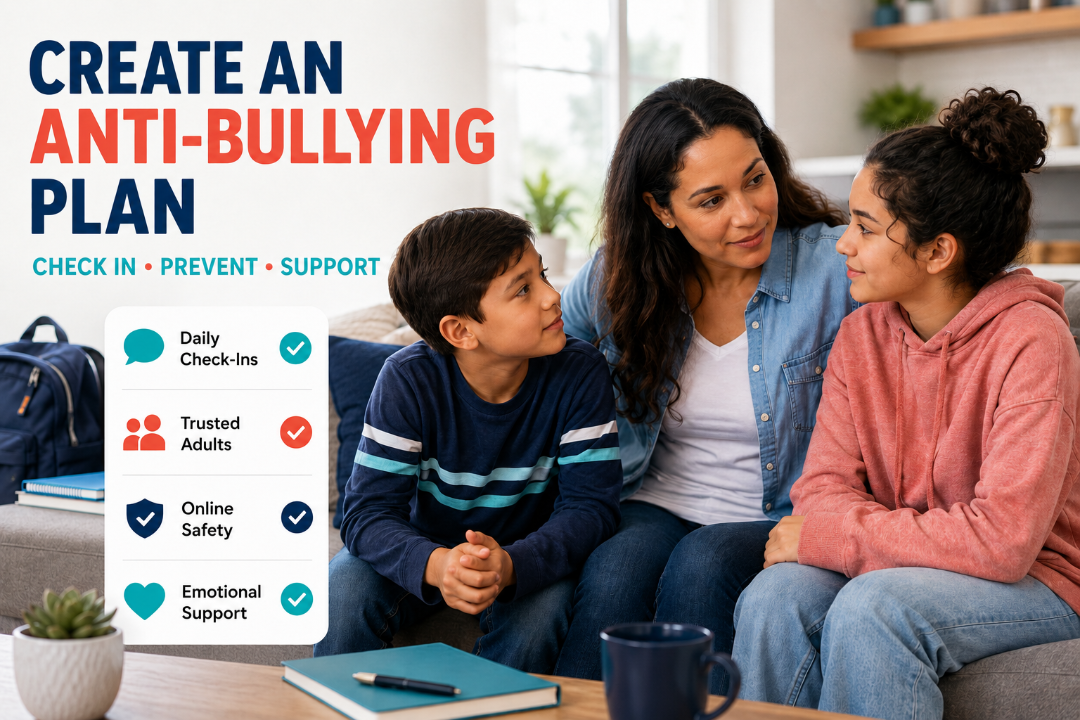
Create a custom anti-bullying plan in AI Parent
Getting started is simple:
- Open AI Parent and visit the Planning page.
- Select the child’s or teen’s profile.
- Choose Custom as the plan category.
- Enter the example request below—or personalize it for your family.
- Review the suggested tasks, adjust them as needed, and save the plan.
“Create an anti-bullying check-in and support plan for my child or teen. Include a daily two-minute conversation, warning signs to watch for, trusted adults, safe ways to respond, online safety, emotional support, and a weekly follow-up.”
Understand what bullying can look like
Bullying is unwanted aggressive behavior that involves a real or perceived power imbalance and is repeated—or is likely to be repeated. It may be verbal, social, physical, or online. A single cruel or threatening incident may not meet the formal definition of bullying, but it still deserves attention.
Watch for injuries, damaged belongings, headaches, sleep changes, falling grades, lost friendships, emotional reactions to devices, or suddenly avoiding school. These signs can have many causes, so begin with a caring conversation.
Use regular, low-pressure check-ins
Choose a quiet moment and ask one or two open questions instead of conducting an interrogation:
- “What was the best and hardest part of your day?”
- “Did anyone make you feel unsafe, embarrassed, threatened, or left out?”
- “Is there a class, activity, group chat, or person you are worried about?”
- “Who at school makes you feel supported?”
Listen without interrupting and thank your child for telling you. Say: “This is not your fault. You deserve to feel safe. We will work through this together.” Do not tell a child to ignore it or fight back. Explain that you will involve only the people needed to keep them safe.
Schedule practical prevention and support tasks
- Daily: Complete a two-minute school and online-safety check-in.
- Daily: Ask whether the child felt safe, included, and able to get help.
- Weekly: Review trusted adults, supportive friends, and safe places.
- Weekly: Practice how to leave, report, block, or respond without fighting.
- As needed: Follow up with the school, coach, counselor, or program leader.
- Ongoing: Schedule a calming or confidence-building activity the child enjoys.
Keep the conversation brief on ordinary days so it remains comfortable and sustainable. If an answer raises concern, pause the routine and give the child your full attention.
Make a practical response plan
- Check immediate safety. Ask about threats, injuries, stalking, weapons, sexual harassment, extortion, or thoughts of self-harm.
- Write down the facts. Record dates, locations, what happened, and who was present. Save cyberbullying screenshots, messages, usernames, and links without reposting them.
- Identify trusted adults. Choose at least two people your child can approach at school, during activities, or on the way home.
- Practice a safe response. Your child might say “Stop,” move to a supervised area, stay near supportive peers, and report the incident.
- Contact the school or organization. Share facts with the teacher, counselor, coach, or administrator. Ask what will be done and when you will follow up.
- Review the plan. Check in regularly and adjust it if the behavior continues, moves online, or appears in another setting.
Teach children what to do when they witness bullying
Bystanders can help without putting themselves in danger. Teach children to get an adult, include the child who was targeted, refuse to join in, and report harmful posts or messages. A private “Are you okay?” can remind someone that they are not alone.
Offer emotional support
Bullying can affect confidence, sleep, school participation, and relationships. Maintain healthy routines and time with supportive people while making room for the child’s feelings. If distress continues or daily life is disrupted, consider a school counselor, pediatrician, or licensed mental health professional.
If your child bullied someone else
Stay calm and focus on accountability rather than labels. Explain what must stop, set appropriate consequences, and help your child understand the harm. Work with the school and practice empathy, conflict management, and respectful problem-solving.
If a child is in immediate danger, contact 911 or local emergency services. If a child is experiencing suicidal thoughts, self-harm risk, or severe emotional distress in the United States, call or text 988 for free, confidential crisis support. Do not leave a child alone when there is an immediate safety concern.
Make bullying prevention part of the family routine
Talk about kindness, boundaries, digital privacy, and asking for help before a crisis occurs. Encourage supportive friendships, review account privacy settings together, and show children how to block and report harmful online behavior. Consistent follow-through helps children trust that adults will take their concerns seriously.
The goal is not to make bullying the center of family life. It is to create a reliable path from “Something happened” to “I know what to do, and I am not facing it alone.”
Create a Custom Plan with AI Parent
Helpful resources
- What Is Bullying — StopBullying.gov
- Warning Signs for Bullying — StopBullying.gov
- Support the Children Involved — StopBullying.gov
- Bullying and Prevention — CDC
This article provides general educational information and is not a substitute for professional medical, mental health, legal, or school-policy guidance.